

Ask most women what perimenopause does to skin, and they will say dryness and wrinkles. The reality is stranger, and much less talked about. At Le Caprice Medical Spa in Orinda, clients regularly come in surprised by changes that have nothing to do with fine lines, and many assume something is wrong with them or their products. Understanding perimenopause and skin starts with knowing what to expect, because the earlier you recognize these changes, the easier they are to manage.
What Perimenopause Is, and Why Skin Notices First
Perimenopause is the transition leading up to menopause. It often begins in the early to mid 40s, sometimes sooner, and can last several years. During this time, estrogen does not simply decline in a straight line. It fluctuates, sometimes sharply, before eventually settling at a lower level.
Skin is one of the first places this shows up, because estrogen helps support collagen, natural oil production, hydration, and the strength of the skin’s protective barrier. When estrogen shifts, all four are affected, and the skin behaves differently than it did the year before.
The Skin Changes Nobody Warns You About
Beyond dryness, these are the changes that surprise women most:
- Itchy, crawling, or tingling skin. Some women feel it with no rash at all. It has a name, formication, and it is linked to falling estrogen affecting skin moisture and nerve sensitivity. It is more common than most people realize.
- Breakouts that return in your 40s. As estrogen falls, androgens, the hormones behind oil and acne, have more influence, so acne can reappear years after you thought you were done with it.
- New redness or flushing. Skin can become more reactive, and rosacea sometimes appears for the first time.
- More or deeper pigmentation. Hormonal shifts can make sun spots and patches darken more easily.
- A routine that suddenly stops working. Often the barrier has changed. The products are not failing, your skin’s baseline has moved.
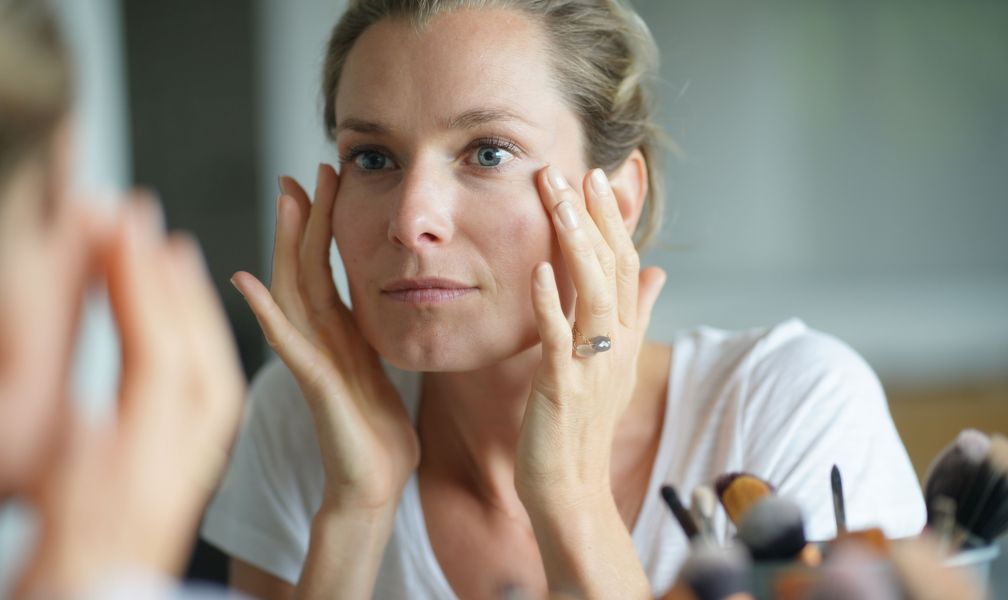
How to Tell a Hormonal Change From an Ordinary Skin Problem
Because these symptoms can have many causes, it helps to look for a pattern rather than a single sign. Hormonal skin changes tend to arrive alongside other shifts: periods that become irregular, disrupted sleep, hot flashes or night sweats, and mood changes. They also tend to appear for the first time after 40, in skin that was previously calm, and they often do not respond to the products that used to work.
If several of these are happening at once, hormones are a likely contributor. That does not mean you have to accept it. It simply means the approach should change, from treating each symptom separately to supporting the skin as a whole.
Why the Timing Matters
One often-cited estimate suggests skin collagen drops sharply, by roughly a third, in the first five years after menopause. The takeaway is not alarm. It is timing. The changes begin during perimenopause, years before periods stop, and supporting the skin early is easier than catching up later.
That is why daily sunscreen matters so much at this stage, since it protects the collagen you still have. It is also why in-clinic treatments that encourage the skin to make its own collagen tend to work best when started earlier. Our guides to CrystalFrax and non-surgical skin tightening explain two options in more detail.
It also helps to think about what you are protecting. Years of sun exposure show up as pigmentation and texture just as hormones are making skin more reactive, so the combination can feel sudden even though it has been building for a long time. Consistent daily protection, a gentle routine, and early professional guidance work together far better than any single fix.
Practical, Less Obvious Moves
These small adjustments are easy to start and tend to make a noticeable difference. They are not a replacement for a good basic routine, but they address the specific ways skin behaves during this stage.
- Keep a simple skin diary. Note flare-ups next to sleep, stress, and hot flashes. Patterns show up quickly.
- Store serums and moisturizers in the fridge. A cool application calms flushing.
- Switch to mineral sunscreen if sweat makes chemical formulas sting.
- Add one change at a time. Skin at this stage is less forgiving of a five-product overhaul.
- Protect your sleep and manage stress. Night sweats and pressure both show up on skin, as we explained in our pieces on the science of beauty sleep and on stress and skin health.
When to Talk to a Professional
Persistent itching, new rashes, or sudden dramatic changes in your skin are worth raising with your doctor, since they can have other causes and are very common at this stage. For help understanding what your skin needs right now, a personalized skin analysis is a useful starting point.
Our estheticians see this transition every day and can help you separate what is hormonal from what is simply a product that no longer suits your skin. Bring a list of what you have noticed and when it began, and the conversation becomes far more useful.
Your skin is not failing, it is changing, and knowing what to expect makes it far easier to respond well.