

Nearly every client who visits Le Caprice Medical Spa in Orinda has heard the phrase “beauty sleep” so many times it barely registers anymore. It turns out there is genuine biology behind it, and understanding beauty sleep and skin health can change a few small nightly habits, your sleep position, your pillowcase, even the timing of your skincare routine, in ways that show up clearly by morning.

What Happens to Your Skin While You Sleep
Sleep is not a passive state for skin. While the body moves through its overnight cycles, blood flow to the skin increases and cell turnover accelerates, replacing damaged surface cells more quickly than during waking hours. The body also releases growth hormone during deep sleep, which supports the production of collagen and elastin, the two proteins responsible for firmness and a smooth, even texture. At the same time, cortisol, the stress hormone associated with collagen breakdown and inflammation, drops to its lowest levels of the day.
This overnight window is also when the skin does much of its repair work from daytime stressors: UV exposure, pollution, and everyday friction. Interrupt that window consistently, through short sleep, fragmented sleep, or an irregular schedule, and the repair process is cut short. The visible result is familiar to anyone who has had a rough week: duller tone, more noticeable fine lines, and puffiness that seems to settle in around the eyes, where fluid naturally pools when drainage slows.
Sleep Position and Its Long-Term Effects
Dermatologists distinguish between two kinds of facial lines: dynamic wrinkles, which form from repeated expressions like smiling or squinting, and static wrinkles, which are present even when the face is at rest. Sleep position contributes meaningfully to the second category. Side and stomach sleeping press the face into the pillow for six to eight hours a night, and that sustained pressure, repeated night after night for years, can gradually etch lines into the same places, often across the cheek and forehead on whichever side bears the weight.
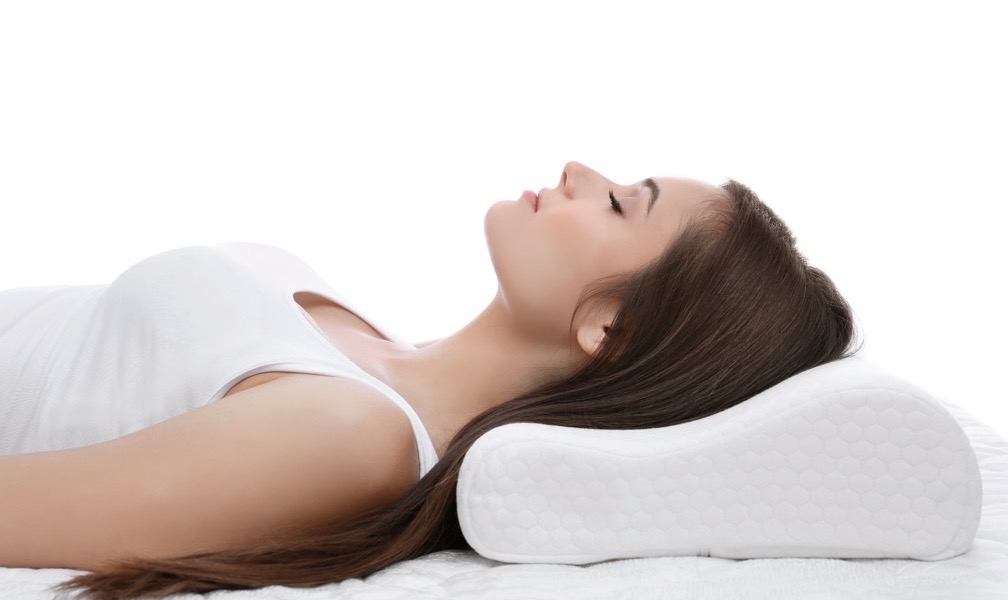
In a person’s twenties, skin is elastic enough to bounce back from this compression by morning. As collagen production naturally slows with age, that recovery takes longer, and the creases increasingly persist into the day. Side sleepers sometimes notice this asymmetry directly: more visible lines and even loss of firmness on one side of the face than the other. Sleeping on the back avoids this pressure entirely, though switching a lifelong sleep habit is not realistic for everyone. A supportive body pillow that discourages rolling onto the side is often a more achievable middle ground than trying to force a new position outright.
Does Pillowcase Fabric Actually Matter?
Silk and satin pillowcases have built a loyal following, and the underlying reasoning is sound, even if the effect is modest rather than dramatic. These fabrics have a smoother surface than cotton, which reduces the friction and drag on skin as a sleeper shifts position through the night. Less friction means less mechanical tugging on the skin’s surface and less absorption of the serums and night creams applied before bed, since a smoother fiber holds less product than a more absorbent one. The same smoothness benefits hair, reducing the friction that leads to tangling and breakage.

Cotton, by contrast, is more absorbent, which pulls moisture away from both skin and hair over the course of the night. None of this makes cotton harmful, and plenty of people sleep on cotton their whole lives with healthy skin. The upgrade to silk or satin is best thought of as a small, cumulative advantage rather than a requirement, one more input alongside the ones that matter more, like sleep duration and consistency.
Building a Better Nightly Routine
The overnight repair window is also the ideal time to apply certain skincare ingredients. Retinoids, for example, increase sensitivity to sunlight and are formulated for nighttime use, when they can work without competing against UV exposure. Applying a nighttime routine well before bed, rather than immediately before lying down, gives products time to absorb fully rather than transferring onto a pillowcase. A cool, slightly humidified bedroom also supports the skin’s barrier function overnight, since dry indoor air, especially common with heating systems in the fall and winter, pulls moisture from the skin while it sleeps.
Consistency matters as much as any single product choice. A regular sleep schedule keeps the body’s repair cycles working on a predictable rhythm, which is difficult to replicate with an inconsistent routine no matter how good the skincare applied beforehand.
When Sleep Habits Are Not Enough
Good sleep hygiene supports skin health, but it does not reverse changes that have already taken hold, particularly the static lines and loss of firmness that accumulate over years of side or stomach sleeping combined with natural collagen decline. For clients dealing with established texture concerns, treatments like CrystalFrax use radiofrequency energy to stimulate fresh collagen production, while our guide to non-surgical skin tightening covers options for more pronounced laxity. A personalized skin analysis is a useful starting point for understanding which combination of habits and treatments makes sense for your skin specifically.
Sleep will not undo years of sun exposure or replace a solid skincare routine, but it is one of the few genuinely free tools available every night. A consistent schedule, a bit of attention to position, and a small pillowcase upgrade add up to a meaningful difference over time.